
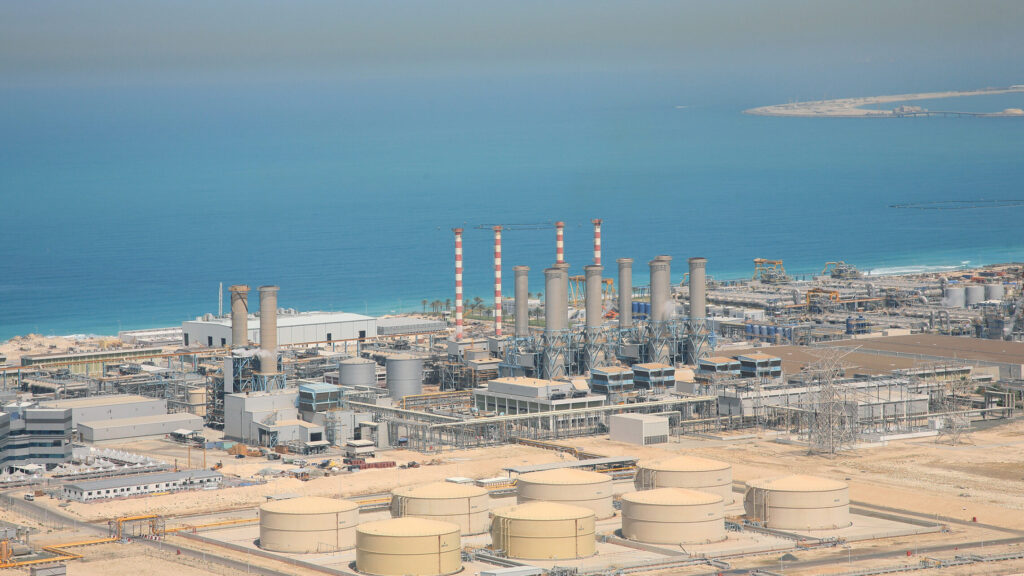
Veolia, a global leader in water technology, has been awarded a $320 million contract to supply key technology for the Hassyan seawater desalination plant in Dubai, UAE. With a capacity of 818,000 cubic meters per day, this reverse osmosis desalination plant will provide drinking water to 2 million people.
Advanced reverse osmosis technologies, combined with Veolia’s expertise in critical pretreatment and posttreatment stages, have reduced the energy required to desalinate seawater by 35% over the past decade. This new generation of highly energy-efficient plants aligns with Veolia’s GreenUp strategic plan, which focuses on preserving water resources through innovative solutions.
Veolia, through its subsidiary SIDEM, will engineer and supply technology for the Hassyan desalination plant, commissioned by Dubai Electricity and Water Authority (DEWA) and ACWA Power. The plant will be the world’s second-largest based on reverse osmosis technology and the largest powered by solar energy. This project underscores Veolia’s commitment to sustainable, low-carbon, and energy-efficient solutions, crucial for water resource preservation in the face of climate change.
Located 55 kilometers southwest of Dubai Creek, the Hassyan desalination plant will start operating in 2026 and reach full capacity by 2027. The plant is part of a broader strategy to increase water desalination capacity sustainably, meeting Dubai’s growing water demand for domestic and commercial uses.
The plant boasts an exceptional energy efficiency performance, with an energy consumption rate of just 2.9 kilowatt-hours per cubic meter (kWh/m3). SIDEM’s extensive expertise in large-scale desalination, particularly in pretreatment and posttreatment stages, has maximized the energy efficiency of RO technology, achieving a 35% reduction in energy consumption over the past ten years.
Situated near the Jebel Ali Wetland Sanctuary, a Ramsar-protected site, the plant’s construction has been carefully planned around the breeding season of endangered turtles to ensure their uninterrupted nesting process. Additionally, the plant strictly adheres to environmental regulations concerning the composition, temperature, and quantity of brine discharged, with discharge areas selected to minimize ecological impact.